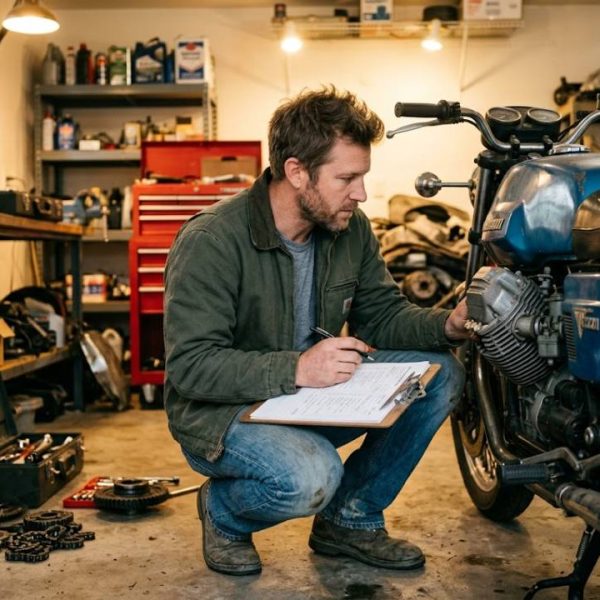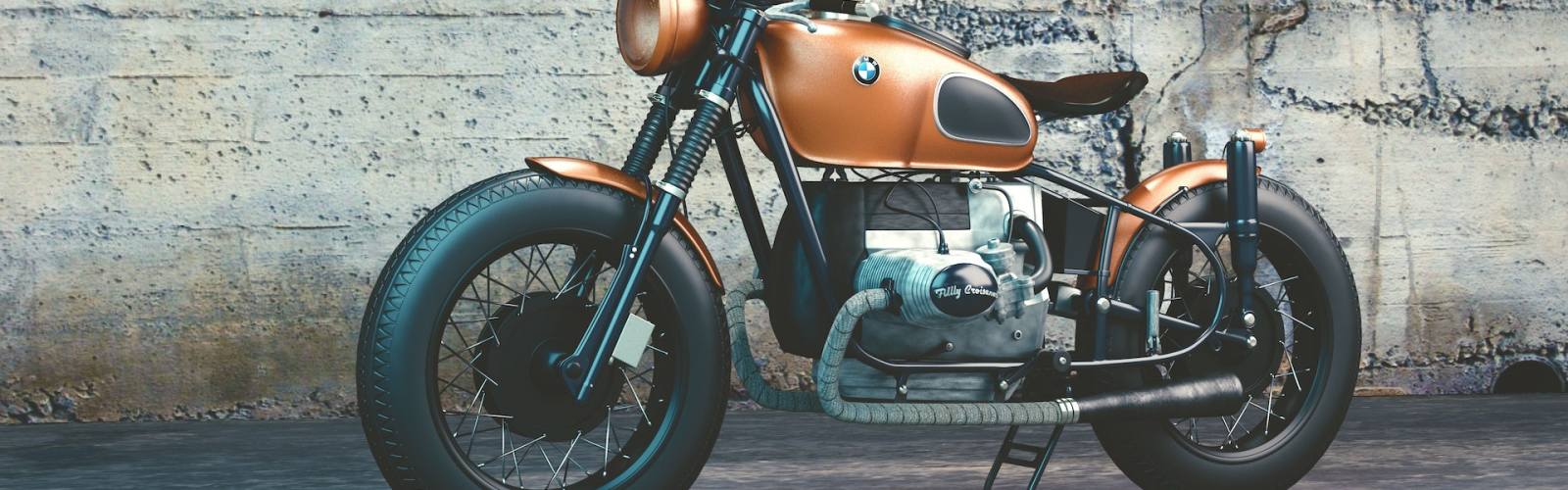
A garage owner in Osaka finds the exact carburetor his customer needs listed on a small parts site in Yekaterinburg. The listing is entirely in Russian and the seller wants a signed order form before shipping.
Importing a rare motorcycle part rarely stops at finding the right listing. It starts a small paper trail that has to survive customs review in two countries at once.
A single mistranslated part number on an order form can send the wrong component across three time zones before anyone notices the mismatch.
Nobody wants to pay international shipping twice because a spec sheet was read wrong the first time.
Shops that import parts regularly learn fast that the translation step matters as much as finding the part in the first place.
Why Parts Orders Need More Than A Rough Translation
Motorcycle parts listings carry specific measurements and tolerances that change meaning entirely with one mistranslated unit or symbol.
Shops sourcing rare components from overseas suppliers increasingly rely on a genuine russian translation service when a listing or invoice arrives with no English version at all.
A poorly translated tolerance spec can lead a mechanic to order a part that looks identical but fits a completely different engine generation.
Shop owners who test a translator on a small order before a large parts shipment catch terminology gaps long before an expensive order goes wrong.
Some import specialists now keep a shortlist of translators who already understand engine terminology so nobody has to explain what a gasket tolerance means mid order.
The Customs Paperwork Problem Nobody Mentions At The Counter
Customs declarations for imported parts require precise language that officials in the receiving country can verify without delay.
A single vague description on a customs form can hold a shipment at the border for weeks while officials request clarification from the sender.
Shops that document engine specifications for international buyers increasingly need accurate professional translation services when a technical manual has to match the original part number exactly for a customs officer to approve release.
A mismatched part description between the invoice and the physical part can trigger a full inspection that adds days to a shipment already running late.
Import specialists who standardize their documentation early avoid the slow drift where every new supplier describes the same part slightly differently.
Smaller shops handling their first overseas order often underestimate how much paperwork a single rare part actually generates before it clears customs.
What Happens When Shops Skip This Step
Skipping a proper translation review feels harmless when a part is in stock today and a customer is waiting at the counter.
The real cost surfaces weeks later when a customs officer flags a mismatched description and the entire shipment gets held pending review.
According to the UNECE inconsistent vehicle part documentation remains a persistent source of delay at border crossings handling automotive freight.
A single held shipment can cost a shop more in storage fees than the part itself was ever worth.
The WCO notes that mismatched documentation remains one of the most common reasons freight gets pulled aside for a manual inspection.
Shop owners who have lived through one customs delay rarely skip a proper translation review again because the wait tends to cost far more than the shortcut ever saved.
Technical Manuals Carry Their Own Risk
Installation manuals for imported parts often arrive in the supplier's native language with no official translation provided.
A mechanic working from a poorly translated manual can install a part correctly by guesswork most of the time and incorrectly on the one occasion it matters.
Shops that keep a translated reference library for common imported parts save time on every future order involving the same supplier or part family.
A single mistranslated torque spec in an installation manual can lead to a part failure that looks like a manufacturing defect but was actually a translation error.
Mechanics who flag unclear translated instructions before starting a repair avoid redoing work that a clearer manual would have prevented the first time.
Apprentice mechanics often assume a translated manual is automatically reliable simply because it reads smoothly in English even when a key step has been quietly simplified.
A shop that keeps notes on which translated manuals caused confusion in the past can warn the next mechanic before the same mistake repeats itself.
Building A Process That Keeps Parts Moving
Shops that import regularly eventually start treating translation as a standing part of the ordering process rather than something handled after a problem appears.
That early planning gives a translator time to flag ambiguous specifications before they become part of an order already shipped.
A shared glossary between a shop and its regular suppliers keeps part names and specifications consistent across every order placed.
Shops that switch translators for every new supplier often end up with inconsistent terminology that mechanics notice and question on the shop floor.
Import specialists who build long relationships with the same translation partners see fewer customs delays and cleaner paperwork with every new shipment.
Smaller shops without a dedicated translation budget sometimes ask a bilingual customer to help with a listing which works fine for a casual purchase but rarely holds up when a customs officer asks pointed questions about a technical spec sheet.
A translation partner who already understands motorcycle terminology saves a shop from re explaining the same technical context every time a new part comes through.
The garage owner in Osaka had already solved this problem months earlier by building a standing relationship with a translator who understood both the language and the mechanical context behind every order form.
When the carburetor finally arrived the paperwork matched the part exactly and customs released it within a day.
The shop owner later admitted that early investment in proper translation had changed how his garage approaches every overseas parts order since.
Regular customers at the garage now notice that overseas orders arrive faster and with fewer surprises than they once did before the shop changed its process.
Other shops in the same trading network have since asked the owner for advice on setting up a similar translation workflow of their own.